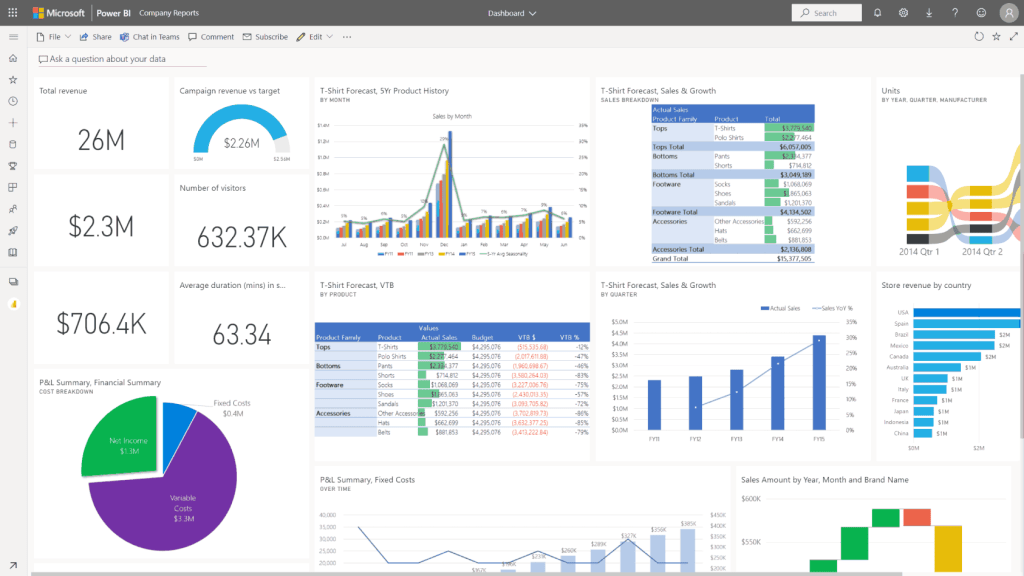
Power BI analytics revolutionises business intelligence by integrating seamlessly with ERP systems, offering businesses a competitive edge through enhanced data insights and decision-making capabilities. Discover how leveraging these analytics tools can streamline operations and drive significant business growth.
Understanding Power BI Analytics
Understanding the capabilities of analytical tools is crucial for harnessing business intelligence within ERP systems. Power BI stands out with its functionality in transforming vast volumes of raw data into actionable intelligence. One of its strengths is its robust data integration capabilities that effortlessly connect with multiple data sources. This integration facilitates seamless data consolidation, providing a cohesive view of the business landscape.
With its intuitive, user-friendly interfaces, Power BI empowers users without technical expertise to navigate complex data environments. Interactive dashboards and customizable reports present data in a visually digestible format, allowing insights and trends to emerge more clearly. Users can explore and drill down into data layers to uncover granular details that influence decision-making.
Real-time data processing is another significant feature of Power BI. It ensures that the data utilised reflects current business conditions, enabling more accurate and timely business decisions. This real-time capability feeds into agile decision-making processes, crucial for maintaining competitiveness.
Several organisations have harnessed Power BI for transformative insights. For instance, financial departments have discovered improved methods for financial reporting, whereas sales teams have enhanced customer analytics for better-targeted strategies. These examples underscore how Power BI catalyzes the evolution of business processes by offering actionable insights. If you’re interested in learning more about integrating agile analytics into your operations, explore build agile business processes for deeper insights.
The Role of ERP Systems in Modern Business
Enterprise Resource Planning (ERP) systems are essential in managing a company’s processes, resources, and operations. They serve as a centralised platform to streamline workflows, integrate data, and enhance decision-making. However, traditional ERP systems can present significant challenges for enterprises. Their rigid structures often fall short in adapting to rapid changes, making businesses less competitive. Furthermore, integrating these systems with modern analytical tools can be intricate, hindering businesses from leveraging the full potential of their data.
The static nature of outdated ERP systems also poses problems in real-time data processing and reporting. As a result, organisations face inefficiencies and delayed decision-making. This is why there’s a growing demand for more agile ERP solutions. Modern ERP systems should incorporate advanced analytics to ensure businesses remain dynamic and responsive to evolving market conditions. The integration of tools like Power BI can transform traditional ERP systems into platforms that support more comprehensive, actionable business intelligence.
Advanced analytics embedded in ERP systems enable seamless data centralisation, offering deeper insights into operational dynamics. By adopting innovative solutions, businesses can optimize resource management and drive operational efficiency. To learn more about enhancing business operations with dynamic ERP systems, consider exploring agile business processes with Microsoft, which offers valuable insights into achieving such transformation.
Integration of Power BI with ERP Systems
Seamless integration of analytical tools with enterprise systems empowers organizations to derive actionable insights. Power BI’s integration with ERP systems transforms how businesses utilize their aggregated data. Connecting these systems generates a comprehensive data landscape, enhancing data centralization. It offers a unified view of business processes, consequently paving the way for better decision-making.
Through robust interfaces, Power BI allows users to extract, transform, and visualize ERP data instantly. This capability eliminates silos and delivers real-time analytics. As a result, organizations can achieve improved diagnostics and predictive analysis. By integrating Power BI with ERP platforms, businesses experience superior analytics that drive operational efficiency and strategic foresight.
The technical benefits extend to scalability and flexibility, providing an adaptive infrastructure that sustains future business needs. On the strategic side, organizations can leverage centralized data to streamline processes and improve forecasting. For example, in the blog post on business management solutions, seamless integration is illustrated through enhanced analytics capabilities, leading to successful insights into sales and financial performance.
Case studies reveal that integrating Power BI with ERP systems like Microsoft Dynamics 365 amplifies business intelligence capabilities. Companies report better alignment between departments, leading to enhanced collaboration. Such an integration not only supports strategic initiatives but also underpins the successful digital transformation of business operations.
Benefits of Enhanced Business Intelligence
Enhancing business intelligence through advanced analytics significantly transforms ERP frameworks. One core advantage is the elevation of decision-making capabilities. Detailed data visualization and real-time insights empower leaders to make informed choices swiftly. The clarity offered by visual analytics reduces uncertainties, allowing businesses to respond promptly to market changes.
Improved resource allocation emerges as another critical benefit. Analyzing extensive datasets uncovers patterns and inefficiencies that traditional methods might overlook. This insight allows businesses to allocate resources efficiently, minimizing waste and optimizing productivity. For example, by examining historical data, companies can forecast demand accurately and adjust inventory levels accordingly.
Increased productivity is a natural outcome of streamlined operations facilitated by enhanced analytics. When stakeholders have access to actionable insights, it simplifies processes across different departments. Workflows become more efficient, leading to a measurable boost in overall productivity. This strategic use of data analytics enables continuous improvement and fosters a culture of data-driven decision-making.
Comparing business performance before and after implementing enhanced ERP systems reveals significant improvements in operational efficiency and profitability. Businesses transition from reactive to proactive decision-making, leveraging predictive analytics to anticipate challenges before they impact operations. As a case in point, implementing tailored ERP solutions can further streamline operations, reducing complexities. For an example, businesses can explore custom ERP software development options available. Through this lens, business transformation is not just about adaptation but about strategically harnessing data to drive success.
Implementing Tailored ERP Solutions
Implementing tailored ERP solutions can drastically improve the operational efficiency of small and medium enterprises. By customizing ERP platforms with expert customization services, businesses can address specific challenges and streamline operations. Many companies face hurdles due to the complexities inherent in traditional ERP systems. Tailored solutions simplify these complexities, making ERP systems more user-friendly and adaptable to unique workflows.
Customization involves several key stages. First, thorough analysis of existing processes identifies areas requiring enhancement. Next, experts use these insights to tailor ERP functionalities that align with the strategic goals of the organization. Companies benefit from a platform that meets their precise needs, rather than adapting processes to fit a generic ERP solution.
Highlighted in this process is the use of advanced customization techniques to improve business functionality. These might include automating routine tasks, integrating with other business tools, and refining data management capabilities.
The ongoing support offered by expert partners ensures that the ERP evolves alongside the business. Continuous improvements and updates keep the system aligned with changing market conditions and business requirements. Enterprises can thus enjoy a dynamic solution that fosters growth and adaptation.
For detailed guidance on optimizing ERP systems, explore the benefits of ERP solutions tailored for business excellence. Connect for expert support in transforming ERP systems for maximum efficiency.
Final words
Harnessing Power BI analytics in ERP systems empowers businesses with profound insights, enhancing decision-making and operational efficiency. By integrating these powerful tools, enterprises can streamline processes, reduce complexities, and drive growth. Consider solutions like Seeside Extended to implement tailored, agile ERP systems that unlock the full potential of your business.